Game Over
Advice to the Reformists
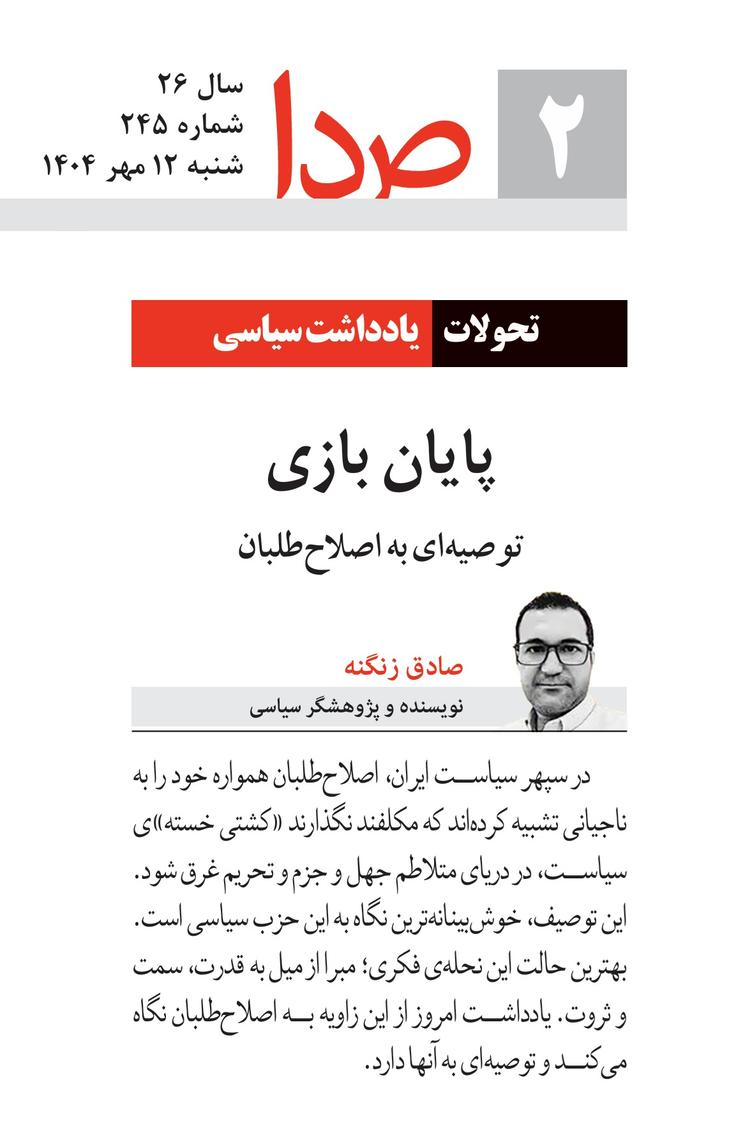
In Iran’s political sphere, reformists have historically styled themselves as selfless saviors destined to prevent the fragile ship of state from capsizing in turbulent waters of dogmatism, ignorance, and sanctions. This remains the most generous characterization of the movement—viewed in its ideal form, untainted by the pursuit of office and patronage.
In every election cycle, this political bloc stakes its remaining social capital, pleading with the electorate to participate in the hope of carving out a modest space for a "normal life" and preventing hardline purists from steering the country toward accelerated ruin.
Yet history documents a relentless, exhausting vicious cycle. Each time reformists secure a portion of executive authority on promises of change, they encounter a formidable wall of institutional obstruction, organized hardline resistance, and legislative sabotage. The political space is squeezed so tightly that the eventual cabinet composition and governing policies become virtually indistinguishable from conservative administrations.
Beneath the surface, deep-state bureaucratic layers act as impenetrable barriers, neutralizing executive directives and expert reform programs. Ultimately, reformist-backed administrations fail to fulfill core pledges, leaving reformists themselves discredited and blamed for systemic paralysis.
Critical campaign promises like dismantling internet censorship and lifting sanctions face unyielding opposition from hardline factions dominating other state organs. Furthermore, overarching foreign policy red lines against dialogue with the West remain entrenched, leaving reformists in the untenable position of assuming executive responsibility without possessing the operational tools necessary to implement their agenda.
Under these circumstances, does persevering on this trajectory yield anything beyond the total depletion of social capital and public cynicism?
The most rational political action today may not be striving to reform a structure that possesses no appetite for reform, but vacating the stage entirely.
Hardline purists must be permitted to assume undivided control of the ship of state without the convenient alibi of an "insider opposition" or "reformist infiltration." Let them steer the course to its logical conclusion, placing their governing philosophy directly before history and the judgment of the Iranian people without mediators.
The hour has arrived for reformists to end this futile game. Clinging to formal office without power merely deepens public cynicism and burns down remaining bridges of dialogue and democratic participation. The most significant political act remaining is stepping aside, allowing total responsibility to rest squarely upon those who claim sole ownership of the state.